Better image prompts, with more stable results
Google Research says its new image tool helps outputs follow the prompt more closely while staying stable. [1]
SeekVero editorial · Published · Prepared with AI assistance; no hands-on testing claimed.
Prepared from cited sources. No hands-on testing claimed.
What Diffusion Controller is
Diffusion Controller is Google Research’s name for a lightweight steering damper network for image generation. In plain terms, it is meant to help an image model listen more closely to the prompt without making the result fall apart. [1]
The point is not just to change images more aggressively. The published goal is to improve prompt alignment while preserving baseline stability and image quality, so the output stays usable even when the prompt gets more specific. [1]
What changes for image generation
If a generator is already good at making plausible images, the hard part is often control: getting the same scene, object, or style details to appear reliably from one prompt to the next. Diffusion Controller is designed to improve that control without forcing a tradeoff that wrecks quality. [1]
That matters when a small wording change should produce a meaningful visual change. A stronger steering layer can make prompt edits more likely to show up in the result, while the baseline model still protects the image from becoming noisy or unstable. [1]
- Write the prompt with the exact detail you want to matter most.
- Use a controller-style steering layer when you need the model to respect that detail more closely. [1]
- Check whether the image still looks coherent and natural, not just more literal. [1]
| Option or question | What to know |
|---|---|
| What it helps with | Making prompt instructions more visible in the final image. [1] |
| What it tries to avoid | Losing the baseline stability and quality that make the image usable. [1] |
A practical before-and-after way to think about it
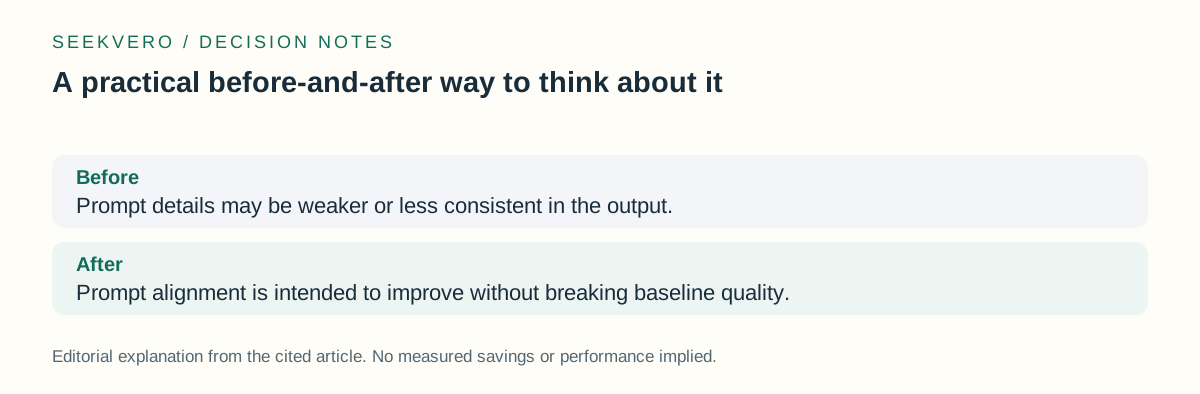
Before: a prompt asks for a specific visual change, but the model partly ignores it or drifts into a generic result. After: the image is expected to track the prompt more closely while still looking stable enough to use. [1]
That is the real promise here. It is less about a new art style and more about reducing the gap between what you asked for and what the generator actually produced. [1]
| Option or question | What to know |
|---|---|
| Before | Prompt details may be weaker or less consistent in the output. [1] |
| After | Prompt alignment is intended to improve without breaking baseline quality. [1] |
Limits, results, and pricing
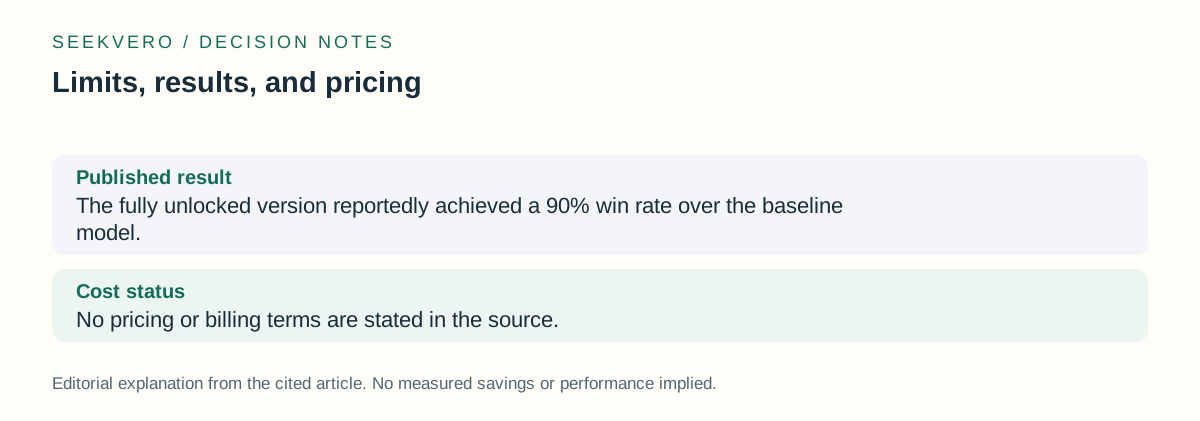
Google Research says the fully unlocked version reportedly reached a 90% win rate over the baseline model. That is a strong published result, but it is still a benchmark claim, not a guarantee that every prompt will behave the same way in every setting. [1]
Not established: No price, plan, or billing terms are stated in the source, so cost is unknown from this announcement. The post is about the research capability, not a released commercial product with published pricing.
| Option or question | What to know |
|---|---|
| Published result | The fully unlocked version reportedly achieved a 90% win rate over the baseline model. [1] |
| Cost status | Not established: No pricing or billing terms are stated in the source. |
Frequently asked questions
Is Diffusion Controller a new image model?
It is described as a lightweight steering damper network for image generation, so the announcement frames it as a controller for guiding outputs rather than a full model replacement. [1]
Does it guarantee better images every time?
No. The announcement supports a stronger prompt-alignment goal and a reported benchmark win rate, but not a universal guarantee for every prompt or use case. [1]
Next step
Use the official Google Research post to review the published description, benchmark claim, and any future updates.
Read the official announcement for the details.