Turn a huge text pile into topics fast
You can sort large text collections into topics without loading everything at once. [2]
SeekVero editorial · Published · Prepared with AI assistance; no hands-on testing claimed.
Prepared from cited sources. No hands-on testing claimed.
What this lets you do
If you have a large pile of documents, Gensim is built to help you turn that text into topic structure without forcing everything into memory at once. Its streaming approach makes the workflow practical when the collection is too big to handle as one loaded dataset. [2]
That matters because topic modelling usually needs repeated passes over text and vector representations. With streamed data, you can keep the process moving through the corpus instead of treating the whole collection like a single file that must fit in RAM first. [2]
How it works on a big corpus
Gensim’s core idea is to process data in streams. In practice, that means you can feed documents through the model step by step rather than loading the full archive before any analysis starts. [2]
For a reader, the practical consequence is simpler hardware pressure and a workflow that scales better with growing text sets. The tradeoff is that you still need a clear text pipeline and some familiarity with how your documents are prepared before modelling begins. [2]
- Prepare your documents so they can be read as a stream rather than a single giant batch. [2]
- Run topic modelling over the streamed corpus to surface repeated themes and clusters. [2]
- Review the topic output, then adjust preprocessing or model settings if the topics look too broad or too narrow.
| Option or question | What to know |
|---|---|
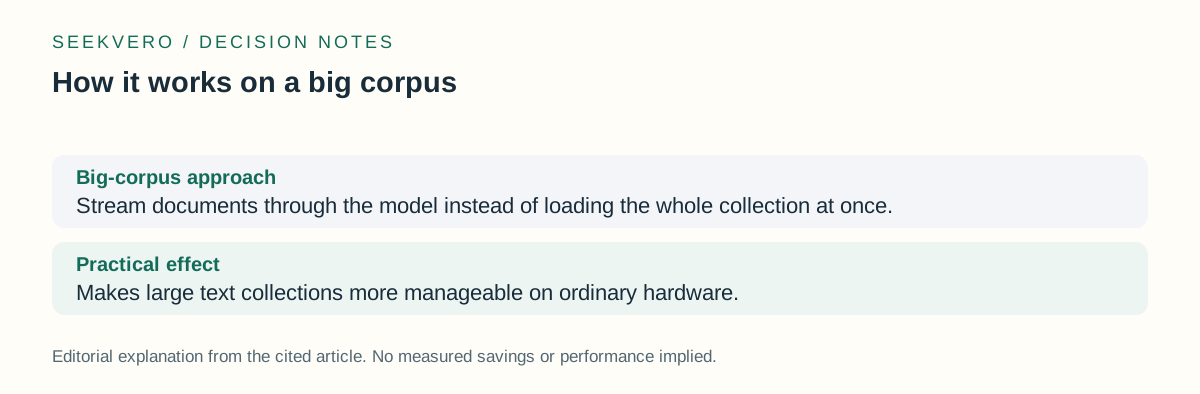
| Big-corpus approach | Stream documents through the model instead of loading the whole collection at once. [2] |
| Practical effect | Makes large text collections more manageable on ordinary hardware. [2] |
Cost and licensing
The core library is free and open source under LGPLv2.1. That makes it easy to evaluate for personal or commercial work without a paid license for the library itself. [1]
Pricing for support, hosting, or related tooling is not established by the core library docs here. If you need a full deployment budget, you would still need to check the surrounding stack separately. [1]
| Option or question | What to know |
|---|---|
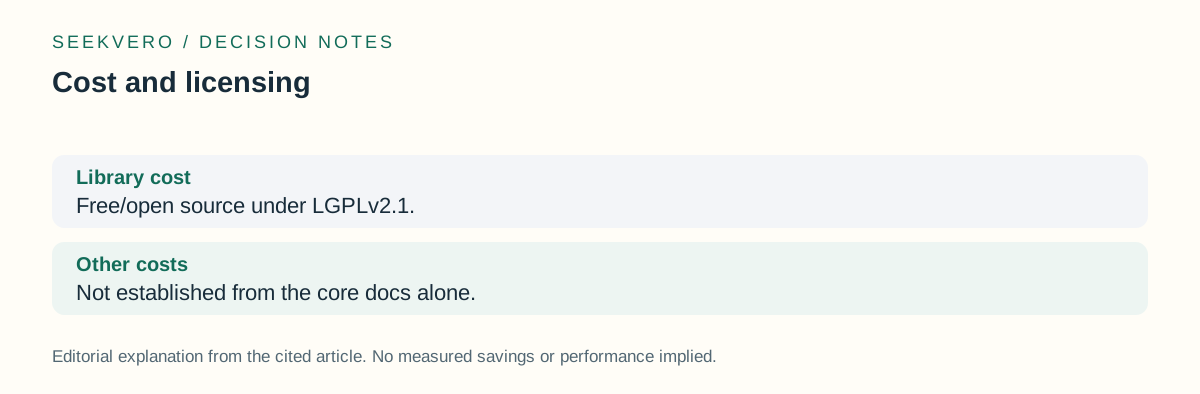
| Library cost | Free/open source under LGPLv2.1. [1] |
| Other costs | Not established: Not established from the core docs alone. |
Who it fits best
This is a good fit if you want to explore themes across a large set of articles, notes, support tickets, or research documents without first building a heavyweight data platform. [2]
It is less about a flashy one-click summary and more about giving you a workable path to topic discovery on sizable text collections. That makes it useful when the problem is scale, not just analysis depth. [2]
- Choose this if your main problem is topic modelling over a corpus that keeps growing. [2]
- Look elsewhere if you need a fully managed product rather than a library you integrate into your own Python workflow.
| Option or question | What to know |
|---|---|
| Best match | Large text collections and custom analysis workflows. [2] |
| Not shown here | Not established: Managed service pricing, hosted UI, or turnkey business workflow features. |
Frequently asked questions
Do I need to load every document into memory first?
No. The library is designed to work with streamed data, so you can process large corpora without loading everything at once. [2]
Is the core library paid?
The core library is free and open source under LGPLv2.1. [1]
Next step
Use the official project pages to review the library, its streaming approach, and its license before deciding whether it fits your text analysis workflow.
Read the official project details.